Using Virgen Cita Digital Papers Patterns in Real Projects
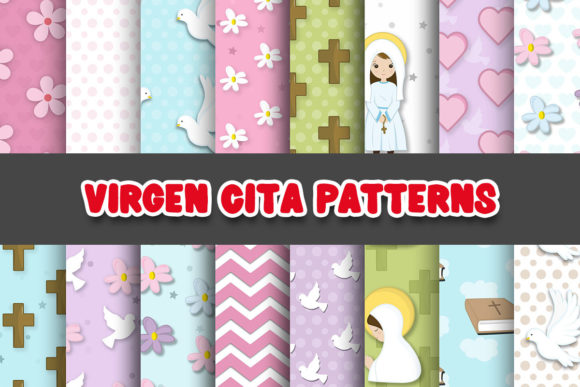
Digital paper sets have become a staple for anyone who regularly produces visual content, whether for personal celebrations or professional client work. The Virgen Cita Digital Papers Patterns collection offers a focused set of sixteen backgrounds built around religious and faith-based motifs, including Virgen Cita imagery, Bible references, and other symbolic patterns. Unlike generic digital paper packs, this set provides a coherent visual language that can support a wide range of projects while maintaining thematic consistency.
Understanding how to integrate these papers into your existing workflow, rather than treating them as standalone decorations, makes the difference between a cohesive final product and a cluttered design. This article walks through practical ways to use these patterns, how they fit into broader creative and business processes, and what to consider when preparing them for long-term use.
What the Virgen Cita Digital Papers Collection Offers
The set includes sixteen individual digital paper backgrounds, each featuring patterns drawn from religious iconography, scriptural references, and symbolic elements associated with Virgen Cita. Because the designs share a consistent aesthetic, you can combine multiple papers within a single project without visual conflict. This is particularly useful when you need to maintain a theme across multiple deliverables, such as a full invitation suite or a series of social media graphics for an event.
The papers come as high-resolution files, which means they can be scaled for both digital and print use. Whether you plan to use them as background textures in a digital invitation, as wrapping paper for small gifts, or as layered elements in a scrapbook layout, the resolution supports clean output at various sizes. This eliminates the need to upscale or interpolate, which often degrades pattern quality.
- Sixteen unique pattern variations – Enough variety to avoid repetition while keeping a unified theme.
- Faith-based motifs – Virgen Cita imagery, Bible verses, and symbolic details that add meaning to projects.
- Print-ready resolution – Suitable for physical products like invitations, banners, and craft items.
- Digital compatibility – Works in standard design software and online platforms without extra conversion.
Where These Patterns Fit in a Workflow
Digital paper sets like this one are often treated as finishing touches, but they can be more useful when integrated earlier in the planning phase. Consider your project timeline and the role these backgrounds will play. For a birthday invitation, for example, selecting the pattern before writing the copy allows you to align color choices, font selection, and layout structure around the background rather than trying to force a pattern to fit an existing design.
Pre-Production Planning
Before you open any design software, review the full set of sixteen papers. Identify the two or three patterns that best match the tone of your project. If you are creating materials for a church event, choose patterns that reference scripture or feature symbolic elements. For a more general celebration, select patterns that use the iconography in a subtle way. This upfront selection prevents you from switching papers mid-project, which can throw off alignment and color balance.
During the Creative Process
When you begin laying out your design, use the chosen paper as the base layer. Adjust opacity if the pattern feels too dominant, or combine two papers in a single layout, using one as a full background and the other as an accent panel. Because the patterns share a common visual language, you can overlay text directly onto the background without losing readability, as long as you choose a font weight that contrasts well with the pattern density.
Post-Project Archiving and Reuse
After completing your project, save a copy of the working file along with the specific pattern files used. This makes it straightforward to produce matching items later, such as thank-you cards, event programs, or social media graphics. Because the set includes sixteen patterns, you have enough variety to create a full brand kit for recurring events, ensuring consistency across years without repeating the exact same design.
Practical Use Cases Across Different Contexts
The value of this digital paper set goes beyond simple decoration. When you approach it as a resource that supports multiple workflows, the return on a single purchase increases significantly.
Event Invitations and Stationery
For birthdays, baptisms, confirmations, and other celebrations where faith-based imagery is appropriate, these papers provide an instant thematic foundation. Instead of searching for separate background textures, you can work from a unified set. Print the invitations on quality cardstock, then use a different pattern from the same collection for the envelope liner or response card. The visual connection between pieces strengthens the overall presentation without requiring extra design work.
Scrapbooking and Memory Keeping
Scrapbook layouts benefit from consistent backgrounds across facing pages. Choose one pattern for the left page and a complementary pattern from the set for the right page. The shared design language keeps the spread cohesive. Because the papers are digital, you can resize elements, rotate patterns, or crop sections to highlight specific motifs. This flexibility matters when you are working with physical prints and need to match specific photo placements.
Digital Content and Social Media
For bloggers, social media managers, and content creators who produce faith-oriented content, these patterns work as video backgrounds, story overlays, or featured image backdrops. Import the digital files into Canva, Photoshop, or your platform of choice, and apply them directly. Because the resolution is high, they hold up on larger screens and projection displays. Rotating through the set for different posts maintains visual variety while reinforcing a consistent brand identity.
Small Business Product Packaging
If you sell physical products such as candles, cards, or small gifts, use these papers as wrapping or as box liners. Customers notice the extra detail, and the faith-based patterns add a layer of meaning that aligns with certain product categories. Printing the papers on matte or textured paper stock enhances the tactile experience without requiring custom printing services.
Preparation and Organization for Efficient Use
How you store and name these digital files affects how quickly you can access them later. A cluttered download folder slows down your workflow, especially when you are under a deadline.
- Rename files descriptively – Instead of generic filenames, use identifiers like "virgen_cita_blue_bible_pattern" or "virgen_cita_gold_icon_detail" so you can locate the right paper by name alone.
- Organize by theme or color – Create subfolders within your digital assets directory for patterns grouped by color temperature or motif density. This allows you to pull options quickly when building a new project.
- Store a preview sheet – Create a single document that shows all sixteen patterns as thumbnails with filenames. Keep this PDF or image file in the same folder. Before starting a project, open the preview sheet to make your selection instead of opening each file individually.
- Backup the original files – Keep the downloaded zip archive and an extracted copy in separate locations, such as an external drive and a cloud folder. Digital paper files are small enough that redundancy is easy to maintain.
Compatibility and Integration With Tools
These digital papers work across most design environments that accept standard image formats. Whether you use Adobe Photoshop, Illustrator, InDesign, Affinity Designer, Canva, or even presentation software like PowerPoint or Google Slides, the files import directly without conversion issues. This broad compatibility means you do not need to purchase additional software or plugins to use the patterns effectively.
For print projects, ensure your design software is set to CMYK color mode if the final output goes to a commercial printer. Digital papers are often provided in RGB, which is fine for screen use and home printers, but professional print shops may request CMYK conversion. Run a test print on your own printer before committing to a large batch, especially if you plan to print on specialty paper stock.
Quality Control and Consistency Checks
Before you finalize any project that uses these patterns, inspect the file at actual output size. Zoom in to verify that the pattern elements remain sharp and that there are no compression artifacts. Because the papers come from a curated set, you can expect consistent color treatment across all sixteen files, but monitor devices vary. Open the same pattern on your phone, tablet, and computer monitor to ensure the colors appear as intended.
If you plan to use multiple patterns in one project, place them side by side in your design software and check for visual balance. High-density patterns next to very sparse ones can feel disjointed. The Virgen Cita collection offers a range of densities, so you can pair a busy pattern with a simpler one to create contrast without chaos.
Long-Term Value and Reusability
A digital paper set provides lasting value only if you integrate it into your asset library rather than using it once and forgetting it. After your first project, review which patterns worked best and note any limitations. For example, if a particular pattern proved too detailed for small print applications, mark that in your organizational notes so you know to use it only for larger formats in the future.
Because the set is themed around Virgen Cita and Bible imagery, it naturally suits recurring annual events such as religious holidays, commemorations, or family celebrations tied to faith traditions. Each year, you can pull from the same sixteen papers to create fresh but familiar designs. By varying the layout, typography, and accessory elements, you keep the output unique without purchasing new backgrounds.
Building a Personal Pattern Library
Over time, combine this set with other digital paper collections that share a similar color palette or design sensibility. When you have multiple themed sets organized in one library, you can mix and match selectively while keeping visual harmony. The Virgen Cita patterns serve as a strong anchor for any faith-based project, while complementary sets can add seasonal or stylistic variation.
Final Observations on Practical Implementation
The effectiveness of any digital asset depends less on the asset itself and more on how you prepare for its use. Taking the time to organize, preview, and test these patterns before your project deadline eliminates the friction that often slows down creative work. Whether you are a hobbyist assembling a family scrapbook or a small business owner producing client invitations, treating the papers as a planned part of your workflow rather than an afterthought leads to better results with less effort.
The sixteen Virgen Cita Digital Papers patterns provide enough range to cover multiple projects while maintaining a clear thematic identity. When you integrate them intentionally, select patterns early, and store them for easy retrieval, they become a reliable resource that supports both immediate tasks and long-term creative planning.