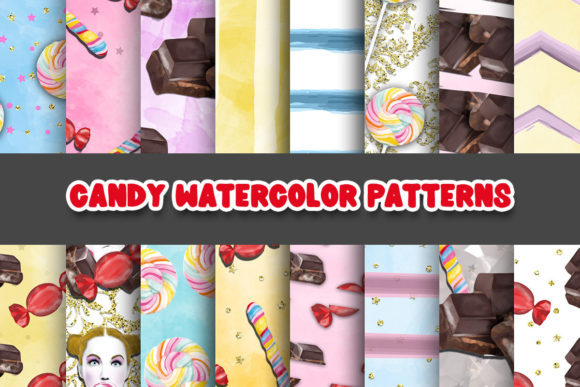
Candy Watercolor Digital Papers Patterns: A Practical Guide for Designers and Crafters
When assembling a visual project—whether for a client, an event, or a personal creative outlet—the choice of background textures and patterns can set the entire tone. A Candy Watercolor Digital Papers Patterns collection offers a specific blend of artistic style and practical utility. It brings the organic, unpredictable beauty of watercolor washes together with the familiar, nostalgic motifs of confectionery. For adults navigating the vast landscape of digital design assets, understanding what this type of resource offers, how it compares to alternatives, and where its true strengths and limitations lie is essential for making an informed, efficient choice.
Understanding the Distinctive Medium of Candy Watercolor Papers
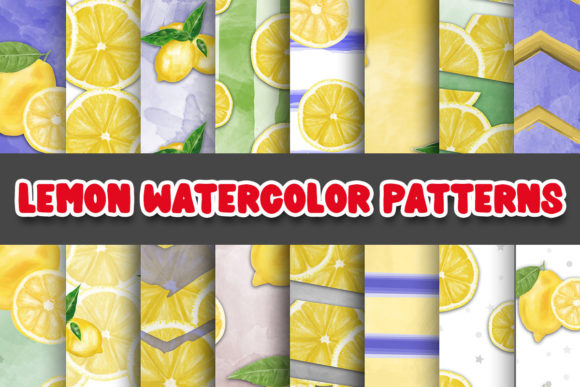
To evaluate any pattern pack, it helps to dissect its core components. The term “watercolor” in the context of digital papers is not merely descriptive; it is a technical and aesthetic signifier. True watercolor patterns are typically created by physically applying pigment to textured paper, allowing the colors to bleed, pool, and dry organically. This process is then captured through high-resolution scanning. The result is a digital file that retains subtle grain, uneven edges, and variations in opacity that are extremely difficult to replicate with purely digital tools.
The “candy” theme within a set of 16 Candy Watercolor Digital Papers usually involves recurring motifs: swirled lollipops, wrapped hard candies, abstract sprinkles, or smooth pastel gradients reminiscent of cream and sugar. When these motifs are executed in watercolor, they gain a softness that moves them away from cartoonish representation and toward a more tactile, artisanal feel. This is what distinguishes this type of resource from a standard digital clip art pack or a flat vector pattern collection. The watercolor medium inherently suggests a handcrafted touch, which can lend a sense of warmth and authenticity to both printed materials and on-screen designs.
Comparing Curated Packs to Broader Design Strategies
In the day-to-day workflow of a designer or serious crafter, the question of resource acquisition is constant. How does a targeted pack of 16 themed backgrounds stack up against other common approaches?
The All-Access Subscription Model
Subscription services offer vast libraries of assets. The tradeoff is discovery time. If you need a candy-themed background for a birthday invitation today, spending an hour browsing thousands of unrelated graphics is inefficient. The 16-purchase gives you immediate, pre-vetted access. You sacrifice breadth for speed and thematic focus. If your work is highly varied, a subscription might pay off. If you have a specific event or product line, the targeted pack is often more practical.
Creating Assets from Scratch
There is a certain pride in crafting your own watercolor textures and candy vectors. It offers complete creative control. However, this path requires a significant investment in materials (paints, paper), time (painting, scanning, cleaning), and software proficiency (Photoshop, Illustrator). For the professional who bills by the hour or the hobbyist with limited free time, a pre-made collection of Candy Watercolor Digital Papers bypasses this entire production pipeline. You are exchanging the labor of creation for the curation and consistency provided by the original artist.
Generic Multi-Theme Pattern Packs
Many pattern packs aim for broad appeal with a mix of florals, geometrics, and seasonal themes. While versatile, they often lack the deep cohesion of a dedicated pack. A candy-themed set ensures that every single background is intentionally color-matched and stylistically aligned. If you try to mix a floral pattern from one pack with a candy pattern from another, you may struggle with clashing color temperatures or inconsistent artistic styles. The Candy Watercolor Digital Papers Patterns set eliminates that guesswork.
Key Strengths: Cohesion, Convenience, and Quality
When a collection of 16 papers is designed as a unified suite, the primary benefit is harmony. You can use any paper in the set alongside any other without jarring aesthetic dissonance. This is invaluable for multi-page projects like scrapbook albums, event stationery suites, or digital lookbooks.
- Consistent Color Palette: The colors used in one background will naturally complement those in another, as they were mixed and applied under the same artistic vision.
- Unified Artistic Technique: The watercolor style—whether loose and abstract or tight and detailed—remains constant across all 16 files.
- Print-Ready Resolution: Most professional-grade digital papers are offered at 300 DPI. This ensures crisp, clear output on physical paper, which is non-negotiable for invitations, gift tags, or party favors.
- Immediate Utility: The files are typically delivered as JPEGs, ready to be dropped into design software, word processors, or even uploaded directly to print-on-demand services.
Realistic Tradeoffs and Limitations to Weigh
No single design resource is a universal solution. Understanding the boundaries of a Candy Watercolor Digital Papers set will help you avoid project roadblocks down the line.
Limited Thematic Scope
A candy pattern pack is exactly that. If your project requires a shift in theme—perhaps from a birthday invitation to a corporate report—this particular set will not serve you. Its value is context-dependent. It excels in celebration, culinary, and nostalgic contexts but is a poor fit for formal or minimalist corporate branding.
Pattern Repeat and Scale Constraints
Many digital papers are designed at 12x12 inches. For standard scrapbooking, card making, and A4/letter printing, this is adequate. If you are looking to tile the pattern across a large banner, a fabric print, or wallpaper, you need to check for seamless repeatability. Not all “pattern” packs are genuinely seamless. When the pattern repeats, the seam should be invisible. If the product description does not explicitly mention seamless tiling, assume a standard tileable or non-tileable layout, which may show a distinct repeat on large surfaces.
Format and Flexibility
JPEG is ubiquitous, but it has limitations. It does not support transparency. If your design requires the watercolor candy pattern to overlay a photograph without a white background, you would need a PNG version. Additionally, because watercolor textures are highly compressed in JPEG, very low-quality compression can introduce artifacts. Reputable designers prioritize high-quality JPEG saves, but this is a factor worth verifying in previews or reviews.
Commercial Use Variations
This is often the most overlooked factor. The license for a set of 16 Candy Watercolor Digital Papers dictates exactly how you can use them. Common allowances include use in physical printed items for sale (invitations, cards) and digital designs for clients (social media templates). Restrictions often apply to reselling the digital files themselves, using them in logo designs (trademark issues), or distributing them within larger design bundles. Always read the license terms provided by the seller, as they vary significantly between independent artists.
Evaluating Fit: Matching the Resource to Your Project
The decision to purchase a themed pattern pack should align with a clear understanding of your output goals. Below are scenarios where the Candy Watercolor Digital Papers Patterns collection is a strong candidate, and others where a different resource might be a better fit.
Best-Fit Situations for Candy Watercolor Papers
- Event Stationery: Birthday party invitations, baby shower announcements, thank-you notes. The celebratory nature of candy motifs aligns perfectly with joyous events.
- Memory Keeping: Scrapbooking pages for children's parties, holiday treats, or trips to confectionery shops. The watercolor texture adds depth behind photographs.
- Small Business Branding: Bakeries, candy shops, and children's boutiques can use these backgrounds for product tags, wrapping paper, and social media posts to reinforce a sweet, artisanal brand voice.
- Educational Crafts: Classroom decorations, reward charts, or teaching materials for young children. The soft, colorful patterns are visually engaging without being overstimulating.
- Digital Products: Blog headers, Pinterest pins, or printable wall art focused on sweet or nostalgic themes.
When to Consider Alternative Resources
- Vector Format Required: For logo design or large-scale signage where infinite scalability is needed, vector graphics (AI, EPS, SVG) are superior to rasterized watercolor patterns.
- Mixed Thematic Needs: If you are creating a seasonal catalog that needs candy patterns for one section and industrial textures for another, buying individual themed packs for each section may be less efficient than a broader subscription or creating modular assets.
- Extreme Precision: Projects requiring exact, crisp lines and solid colors (technical illustrations, corporate infographics) will clash with the organic, bleeding nature of watercolor.
Practical Decision Factors for Choosing a Pattern Pack
When you evaluate a specific collection of 16 Candy Watercolor Digital Papers, look beyond the preview images. Consider the following technical and aesthetic criteria:
- Resolution and Dimension: Confirm the file size and resolution. 300 DPI at 12x12 inches is standard for high-quality printing. Lower resolutions may suffice for web use but will pixelate when printed.
- Color Mode: For professional printing, CMYK is preferred. For web use, RGB is standard. Some packs provide both, while others require you to convert. Color shifts can occur during conversion, so knowing the original format is helpful.
- Pattern Density: Is the pattern a tight, all-over repeat of small candies, or is it a large, sparse arrangement? A tight pattern works well for backgrounds where text needs to be legible. A large, sparse pattern might act more as a focal graphic.
- Artistic Authenticity: Is the watercolor effect genuine (scanned from physical paint) or simulated via digital filters? Genuine watercolor offers deeper textural complexity, while simulated versions may appear flat or repetitive under close inspection.
- Licensing Clarity: A clear, written license is a sign of a professional designer. If the license is vague or missing, consider it a red flag, especially for commercial use.
A Realistic Example: Planning a Birthday Invitation Suite
Let us walk through a common scenario. You are tasked with creating invitations, coordinating thank-you cards, and a banner for a child's birthday party with a candy theme.
Option A: Building from a Curated Pack
Selecting a set of Candy Watercolor Digital Papers Patterns gives you an instant unified palette. You choose a lollipop pattern for the invitation background, a soft pastel wash for the thank-you card, and a vibrant candy-stripe pattern for the banner. Because all papers come from the same set, the colors and textures harmonize immediately. You spend your time on layout and typography, not on color correction or sourcing additional assets. The project moves quickly and the final print result is cohesive.
Option B: Sourcing Individually
You find a beautiful lollipop graphic as a vector, a watercolor texture from a different site, and a generic pastel background from a third source. Integrating them requires adjusting opacity, matching color profiles, and potentially creating custom patterns. The process is more time-intensive and requires intermediate design skills. The final result may have subtle inconsistencies that an untrained eye will not see, but that can affect the overall polish of the suite.
For someone with tight deadlines or limited design software expertise, Option A is clearly the more efficient and reliable path. For someone seeking complete originality and control, Option B might be preferable despite its higher time cost.
Making an Informed Choice in the Digital Asset Landscape
The availability of high-quality themed digital papers has dramatically lowered the barrier to professional-looking design for small businesses, event planners, and hobbyists. A collection of 16 Candy Watercolor Digital Papers represents a specific tool in a larger toolkit. It is not a replacement for custom illustration or technical vector design, nor is it meant to be. It is a resource optimized for speed, consistency, and aesthetic charm in a specific niche.
When deciding, weigh the cost of the pack against the time you would spend creating or sourcing equivalent assets. Evaluate the license against your intended commercial or personal use. Critically assess the resolution and format to ensure it meets your output requirements. The right pattern pack does not just provide a background; it provides a reliable foundation upon which you can build creative work with confidence and efficiency. By understanding what you are gaining in terms of cohesion and what you are trading in terms of flexibility, you place yourself in a much stronger position to choose the right resource every time.